
The car insurance industry is rapidly changing, and one of the biggest innovations transforming the market is Telematics Car Insurance.
Instead of relying only on age, location, and driving history, insurers in 2026 now use real-time driving behavior to calculate premiums. This technology-driven approach is helping safe drivers save money while encouraging smarter and safer driving habits.
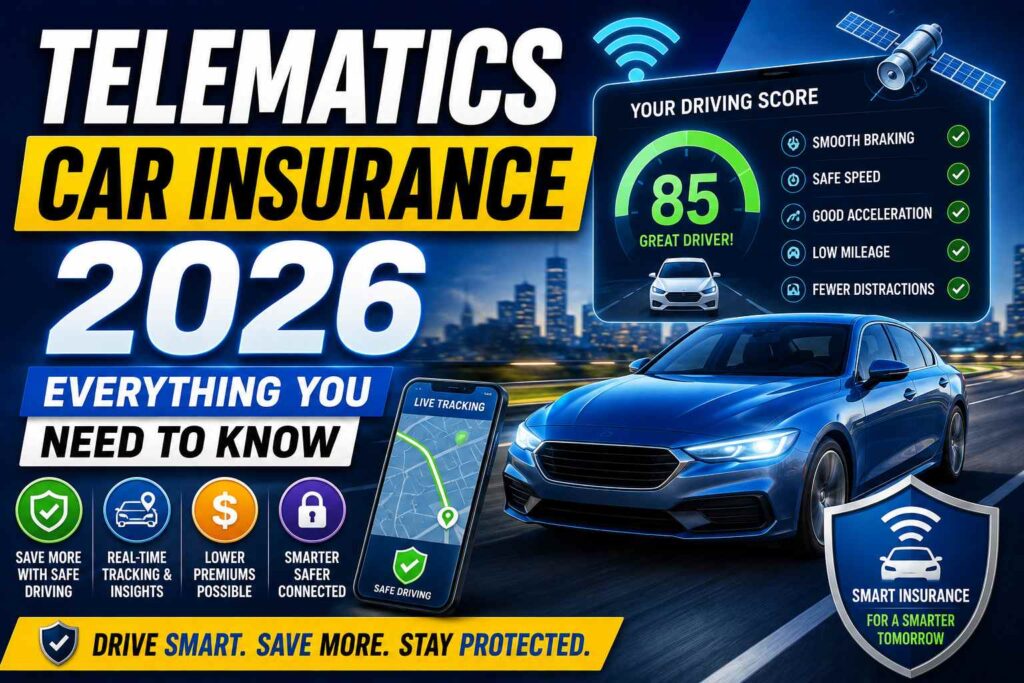
In this complete guide, you’ll learn:
- What telematics car insurance is
- How it works
- How insurers track driving behavior
- Pros and cons
- Privacy concerns
- Potential savings
- Who should consider usage-based insurance in 2026
What Is Telematics Car Insurance?
Telematics car insurance, also called:
- Usage-Based Insurance (UBI)
- Pay-How-You-Drive Insurance
- Smart Car Insurance
Uses technology to monitor driving behavior and determine insurance premiums.
Insurance companies collect driving data through:
- Mobile apps
- GPS devices
- Plug-in trackers
- Built-in connected car systems
Drivers who demonstrate safe habits may receive significant discounts.
How Does Telematics Insurance Work?
After enrolling in a telematics program, your insurer tracks various driving behaviors.
Common Data Collected
Speed
Frequent speeding may lower your driving score.
Braking Patterns
Hard braking can indicate risky driving behavior.
Acceleration
Aggressive acceleration is often penalized.
Mileage
Lower annual mileage can reduce premiums.
Time of Driving
Late-night driving is generally considered higher risk.
Cornering & Handling
Sharp turns and unsafe handling may affect your score.
Phone Usage
Some apps detect distracted driving.
Also Read: Term Life Insurance vs Whole Life Insurance: Which One Is Better in 2026?
How Insurers Track Your Driving
1. Smartphone Apps
Many insurers now use mobile apps to monitor driving.
Advantages
- Easy setup
- No hardware installation
- Real-time feedback
Disadvantages
- Battery consumption
- Privacy concerns
2. OBD-II Plug-In Devices
These small devices connect to your car’s diagnostic port.
Benefits
- Accurate vehicle data
- Reliable tracking
Drawbacks
- Requires installation
- Not compatible with all vehicles
3. Built-In Connected Cars
Modern vehicles increasingly include factory-installed telematics systems.
This is becoming common in:
- Electric vehicles
- Smart cars
- Premium vehicles
Benefits of Telematics Car Insurance
1. Lower Insurance Premiums
Safe drivers can often save:
- 10%
- 20%
- Even 40%+ in some cases
This is one of the biggest reasons drivers switch to telematics insurance.
2. Rewards Safer Driving
Drivers become more aware of:
- Speeding
- Hard braking
- Distracted driving
This can lead to safer road habits overall.
3. Personalized Insurance Pricing
Traditional insurance uses broad risk categories. Telematics provides personalized pricing based on actual driving behavior.
4. Better Accident Assistance
Some systems automatically detect crashes and alert emergency services.
5. Theft Recovery & Vehicle Tracking
GPS tracking may help recover stolen vehicles faster.
Drawbacks of Telematics Insurance
1. Privacy Concerns
Some drivers dislike insurers collecting:
- GPS location data
- Driving habits
- Travel history
Data privacy remains a major debate in 2026.
2. Unsafe Drivers May Pay More
Aggressive or high-risk drivers could see premiums increase.
3. Constant Monitoring
Some people feel uncomfortable being tracked continuously.
4. App or Device Errors
Incorrect data collection may occasionally affect driving scores unfairly.
Who Should Use Telematics Car Insurance?
Telematics insurance works best for:
Safe Drivers
Drivers with responsible habits often benefit most.
Low-Mileage Drivers
People who drive less frequently may qualify for discounts.
Young Drivers
Young motorists can reduce high premiums by demonstrating safe driving behavior.
Remote Workers
People working from home often drive fewer miles.
Who Should Avoid Telematics Insurance?
Telematics may not be ideal for:
- Aggressive drivers
- Frequent late-night drivers
- Long-distance commuters
- Drivers concerned about privacy
Telematics Insurance vs Traditional Car Insurance
| Feature | Telematics Insurance | Traditional Insurance |
|---|---|---|
| Premium Calculation | Based on real driving behavior | Based on demographics & history |
| Tracking Required | Yes | No |
| Potential Savings | Higher for safe drivers | Limited |
| Privacy Concerns | Higher | Lower |
| Driving Feedback | Real-time | None |
How Much Can You Save With Telematics Insurance?
Savings depend on:
- Driving habits
- Mileage
- Insurer
- Vehicle type
Typical Savings in 2026
| Driving Behavior | Estimated Savings |
|---|---|
| Excellent driving | 25–40% |
| Average driving | 5–15% |
| Risky driving | Possible premium increase |
Is Telematics Insurance Safe?
Most major insurance companies use encrypted systems to protect user data. However, drivers should still review:
- Privacy policies
- Data sharing rules
- Data retention practices
Before enrolling in any telematics program.
Also Read: Life Insurance for Seniors Over 60 (2026 Complete Guide)
Future of Telematics Insurance in 2026
The telematics market is growing rapidly due to:
- AI-powered driving analysis
- Connected vehicles
- Electric cars
- Smart city infrastructure
- Advanced GPS systems
Experts predict telematics will become one of the standard pricing models for car insurance over the next decade.
AI & Telematics: The Next Big Shift
Artificial intelligence is improving telematics systems by:
- Detecting risky behavior faster
- Predicting accident risks
- Offering real-time coaching
- Automating claims processing
Some insurers now provide AI-based driving tips directly through their apps.
Telematics Insurance for Electric Vehicles (EVs)
Tesla Model 3 and other smart EVs already include advanced telematics systems.
EV owners may benefit from:
- Integrated driving analytics
- Connected insurance systems
- Real-time diagnostics
- Enhanced theft protection
This trend is expected to expand rapidly in 2026.
Tips to Improve Your Driving Score
Drive Smoothly
Avoid sudden braking and acceleration.
Reduce Night Driving
Late-night driving is often considered higher risk.
Limit Phone Usage
Distracted driving heavily impacts scores.
Maintain Safe Speeds
Consistent speed control improves ratings.
Drive Fewer Miles
Lower mileage can reduce insurance costs.
Common Myths About Telematics Insurance
Myth 1: It’s Only for Young Drivers
Drivers of all ages can benefit.
Myth 2: Insurers Spy on Everything
Most insurers only track driving-related behavior relevant to risk assessment.
Myth 3: It Always Raises Rates
Safe drivers usually save money.
Frequently Asked Questions (FAQs)
What is telematics car insurance?
Telematics insurance uses technology to monitor driving behavior and calculate insurance premiums.
Can telematics lower insurance costs?
Yes. Safe drivers may receive substantial discounts.
Does telematics track location?
Many programs use GPS tracking, though data usage varies by insurer.
Is telematics insurance mandatory?
No, it is optional.
Can bad driving increase premiums?
Yes, risky driving behavior may lead to higher costs.
Final Verdict
Telematics car insurance is reshaping the future of auto insurance in 2026. By rewarding safer driving habits with lower premiums, insurers are creating a more personalized and technology-driven system.
For safe drivers, low-mileage users, and tech-savvy motorists, telematics insurance can offer:
- Significant savings
- Better driving awareness
- Smart safety features
- Personalized pricing
However, drivers should carefully consider privacy concerns and understand how their data is being used before enrolling.
Conclusion
As connected vehicles and AI continue to evolve, telematics insurance is likely to become one of the dominant insurance models worldwide. Whether you’re looking to reduce premiums or improve driving habits, telematics car insurance offers a modern solution tailored to the digital age.
Before choosing a policy:
- Compare insurers
- Review privacy policies
- Understand scoring systems
- Evaluate potential savings
The future of car insurance is increasingly data-driven — and telematics is leading the way.