
Term Life Insurance is a type of life insurance that protects your family financially for a specific period of time.
In simple words:
You pay a monthly or yearly premium to an insurance company, and if you die during the policy term, your family receives a lump-sum payout called a death benefit.
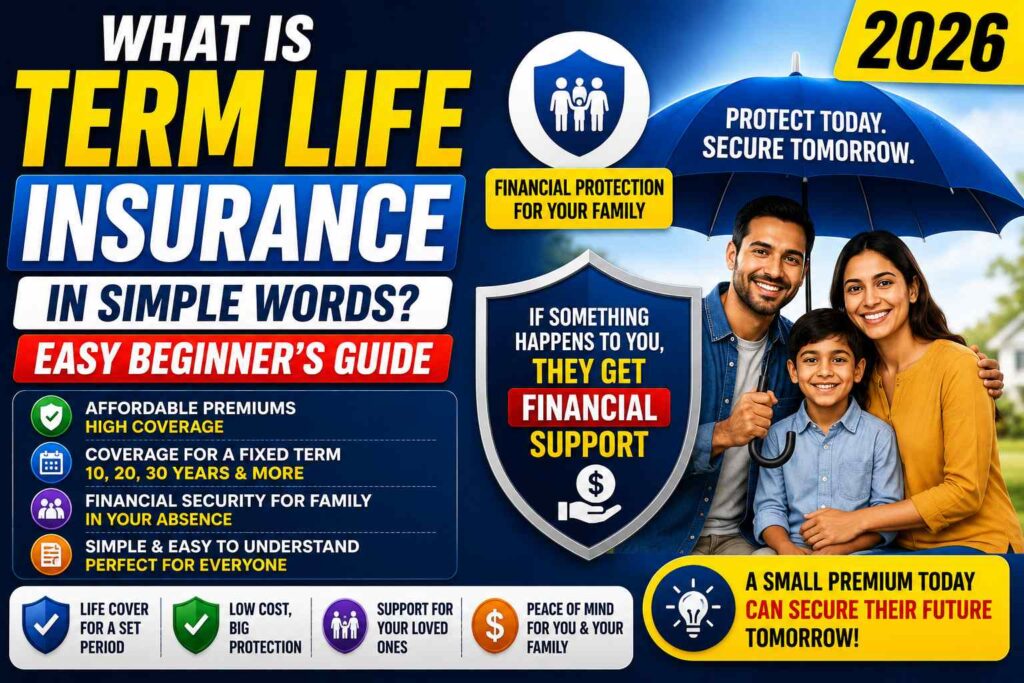
The coverage lasts only for a fixed number of years, such as:
- 10 years
- 20 years
- 30 years
If the policy term ends and you are still alive, the coverage usually expires.
Simple Example of Term Life Insurance
Imagine:
- You buy a 20-year term life insurance policy
- Coverage amount = $500,000
- Monthly premium = $25
If you pass away during those 20 years:
- Your family may receive $500,000
If you survive the 20-year term:
- The policy ends
- No payout is made
Why People Buy Term Life Insurance
Most people buy term life insurance to financially protect their loved ones.
It can help families:
- Pay monthly bills
- Cover rent or mortgage
- Handle education expenses
- Pay off debts
- Replace lost income
- Cover funeral costs
Also Read: Term Life Insurance vs Whole Life Insurance: Which One Is Better in 2026?
How Does Term Life Insurance Work?
The process is usually simple.
Step 1: Choose Coverage Amount
You decide how much protection your family would need.
Example:
- $100,000
- $500,000
- $1 million
Step 2: Choose Policy Term
Select how long the policy should last.
Common terms:
- 10 years
- 20 years
- 30 years
Step 3: Pay Premiums
You pay regular premiums:
- Monthly
- Quarterly
- Annually
Step 4: Insurance Protection Begins
If you die during the policy term:
- Your beneficiaries receive the death benefit
Why Is It Called “Term” Life Insurance?
It is called “term” life insurance because the coverage lasts for a limited term or period of time.
Unlike permanent insurance, it does not provide lifelong coverage.
Main Features of Term Life Insurance
Affordable Premiums
Term life insurance is usually much cheaper than whole life insurance.
Fixed Coverage Period
Coverage only lasts for the selected term.
Simple Structure
There are no investment or savings components.
Large Coverage Amounts
You can often get high coverage at low monthly costs.
Types of Term Life Insurance
Level Term Insurance
Premiums and coverage stay the same throughout the policy term.
This is the most common type.
Decreasing Term Insurance
Coverage decreases over time.
Often used for:
- Mortgages
- Loans
Renewable Term Insurance
Allows policy renewal after the term ends.
Premiums usually increase with age.
Convertible Term Insurance
Can later be converted into permanent life insurance.
Advantages of Term Life Insurance
Lower Cost
It provides affordable financial protection.
Easy to Understand
Simple coverage without complicated investment features.
Ideal for Families
Perfect for protecting children and dependents.
Flexible Coverage Options
Available in multiple term lengths and coverage amounts.
Disadvantages of Term Life Insurance
Temporary Coverage
The policy expires after the term ends.
No Cash Value
Unlike whole life insurance, it does not build savings.
Premiums Increase on Renewal
Renewing later may become expensive due to age or health changes.
Term Life Insurance vs Whole Life Insurance
| Feature | Term Life Insurance | Whole Life Insurance |
|---|---|---|
| Coverage Duration | Fixed term | Lifetime |
| Cost | Lower | Higher |
| Cash Value | No | Yes |
| Simplicity | Simple | More complex |
| Best For | Temporary protection | Long-term wealth planning |
Who Should Buy Term Life Insurance?
Term life insurance is often best for:
Parents
Protect children financially.
Young Families
Affordable protection during important years.
Homeowners
Helps cover mortgage payments.
People With Debts
Can help pay loans and financial obligations.
Primary Income Earners
Replaces lost income for dependents.
Also Read: Best Life Insurance for Young Adults in 2026: The Complete Guide
How Much Term Life Insurance Do You Need?
A common recommendation is:
10–15× Your Annual Income
Example:
- Annual income = $50,000
- Suggested coverage = $500,000–$750,000
Simple Coverage Formula
\text{Recommended Life Insurance Coverage} \approx 10 \times \text{Annual Income}
How Much Does Term Life Insurance Cost?
Costs depend on:
- Age
- Health
- Smoking status
- Coverage amount
- Policy length
Average Monthly Costs (Healthy Non-Smoker)
| Age | $500K Coverage |
|---|---|
| 25 | $20–$30 |
| 35 | $30–$50 |
| 45 | $70–$120 |
Is Term Life Insurance Worth It?
For many families, yes.
It offers:
- Affordable financial protection
- Peace of mind
- Income replacement security
It is especially valuable during years when others depend on your income.
What Happens When the Term Ends?
When the policy expires:
- Coverage ends
- No payout occurs if you are still alive
Some policies allow:
- Renewal
- Conversion to permanent insurance
Can You Cancel Term Life Insurance?
Yes.
Most term life insurance policies can be canceled anytime by stopping premium payments.
Is Medical Exam Required?
Sometimes yes.
Many insurers require:
- Health questionnaires
- Medical exams
However, no-exam term life policies are also available.
Common Mistakes People Make
Buying Too Little Coverage
Families may remain underprotected.
Waiting Too Long
Premiums increase with age.
Choosing the Cheapest Policy Only
Always compare:
- Insurer reputation
- Claim settlement history
- Coverage features
Why Term Life Insurance Is Popular in 2026
People increasingly prefer term insurance because:
- It is affordable
- Families need financial protection
- Living costs are rising
- More people want simple insurance products
Frequently Asked Questions (FAQs)
What is term life insurance in simple terms?
It is life insurance that protects your family financially for a fixed number of years.
Is term life insurance good?
Yes, especially for affordable family protection.
Do you get money back at the end of term life insurance?
Usually no, unless you purchased a return-of-premium policy.
What happens if I don’t die during the term?
The policy usually expires without payout.
Is term life insurance expensive?
Generally no. It is often the cheapest type of life insurance.
Final Verdict
Term life insurance is one of the simplest and most affordable ways to financially protect your family. It provides coverage for a specific period and helps ensure your loved ones have financial support if something happens to you.
For most people, term life insurance is a practical choice because it offers:
- High coverage
- Low premiums
- Easy understanding
- Flexible options
Conclusion
Understanding term life insurance in simple words helps make insurance decisions much easier. If your family depends on your income, having term life insurance can provide valuable financial security and peace of mind.
Before buying a policy:
- Compare multiple insurers
- Choose the right coverage amount
- Select a suitable term length
- Understand policy conditions
The right term life insurance policy can help protect your family’s future during life’s most important years.