
Missing an insurance payment can happen to anyone due to:
- Financial difficulties
- Forgotten due dates
- Banking issues
- Emergency situations
But many people worry about what happens next.
Will your insurance immediately cancel?
Will you lose coverage?
Will it affect your credit score?
The answer depends on the type of Insurance policy and how long the payment remains unpaid.
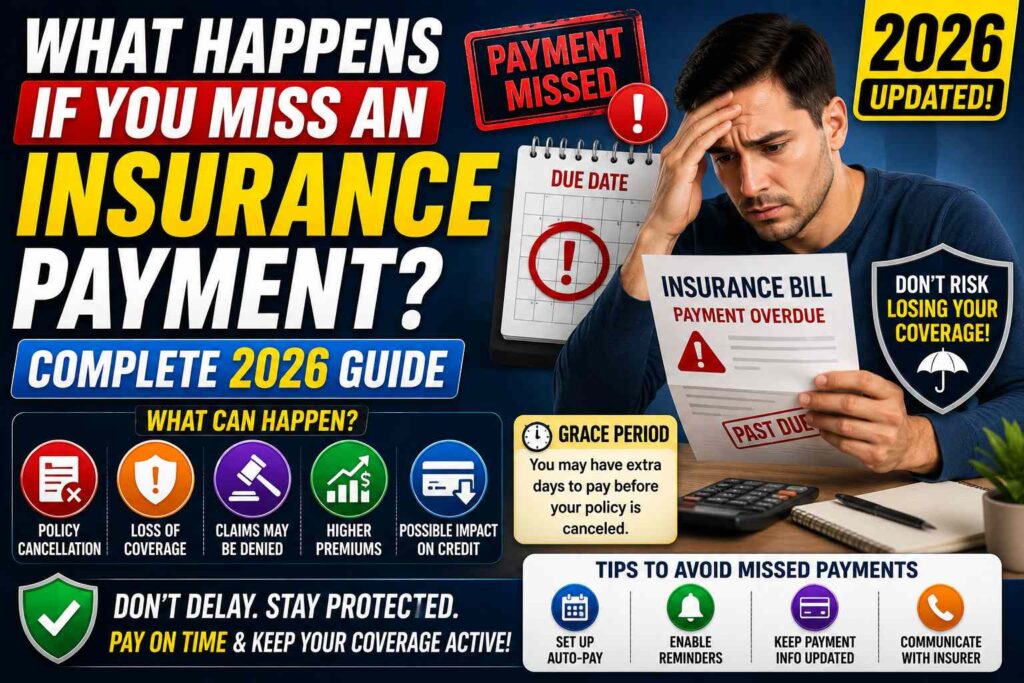
In this guide, you’ll learn:
- What happens after missing an insurance payment
- Grace periods explained
- Policy cancellation risks
- Reinstatement options
- Late fees and penalties
- How different insurance types handle missed payments
Does Insurance Cancel Immediately After a Missed Payment?
Usually, no.
Most insurance companies provide a grace period after a missed payment. During this time, your coverage may continue temporarily while you catch up on payments.
However, rules vary depending on:
- Insurance type
- Insurance company
- State or country regulations
- Policy terms
What Is an Insurance Grace Period?
A grace period is the extra time allowed after a missed payment before the policy is canceled.
During the grace period:
- Your policy may remain active
- You can make the overdue payment
- Late fees may apply
Simple Grace Period Formula
\text{Missed Due Date} + \text{Grace Period} = \text{Final Date Before Cancellation}
Also Read: Best Life Insurance for Young Adults in 2026: The Complete Guide
Typical Insurance Grace Periods
| Insurance Type | Common Grace Period |
|---|---|
| Auto Insurance | 7–30 days |
| Health Insurance | 30–90 days |
| Life Insurance | 30 days |
| Homeowners Insurance | 10–30 days |
These periods vary by insurer and policy.
What Happens During the Grace Period?
Coverage May Continue
In many cases, insurance protection remains active temporarily.
Late Fees May Apply
Some insurers charge penalties for overdue payments.
You Receive Notices
Insurance companies often send:
- Emails
- SMS reminders
- Letters
- Cancellation warnings
What Happens If You Don’t Pay Within the Grace Period?
If payment is not made before the grace period ends, the insurer may cancel your policy.
This is called:
Policy Lapse
or
Policy Cancellation
After cancellation:
- Coverage stops
- Claims may be denied
- You become financially exposed
What Happens If Auto Insurance Lapses?
Auto Insurance lapses can become serious very quickly.
Possible Consequences
Driving Without Insurance
In many places, this may be illegal.
Fines & Penalties
You could face:
- Fines
- License suspension
- Vehicle registration issues
Higher Future Premiums
Insurance companies may consider lapses risky behavior.
Accident Risks
If you crash without coverage:
- You may personally pay all damages and medical costs
What Happens If Life Insurance Payments Are Missed?
Life Insurance policies usually include grace periods.
If unpaid beyond the grace period:
- The policy may lapse
- Beneficiaries may lose the death benefit protection
Some permanent life insurance policies may continue temporarily using accumulated cash value.
What Happens If Health Insurance Payments Are Missed?
Health Insurance companies often provide longer grace periods.
Possible consequences include:
- Coverage suspension
- Claim delays
- Policy termination
Losing health coverage can create major medical financial risks.
What Happens If Home Insurance Payments Are Missed?
Homeowners Insurance may be canceled if payments remain unpaid.
This creates serious risks because:
- Mortgage lenders often require coverage
- You become financially exposed to property damage
- Future premiums may increase
Can You Reinstate a Canceled Insurance Policy?
Sometimes yes.
Many insurers allow policy reinstatement if:
- The lapse was recent
- Outstanding payments are made
- New underwriting is not required
However:
- Rates may increase
- Coverage gaps may exist
- Reinstatement is not guaranteed
Insurance Reinstatement Formula
\text{Overdue Premiums} + \text{Late Fees} = \text{Possible Reinstatement Payment}
Will Missing an Insurance Payment Affect Credit Score?
Usually:
- Missing a payment itself may not directly affect your credit immediately
However:
- Collections accounts
- Unpaid balances
- Cancelled debts
could eventually affect your credit report.
Can Claims Be Denied After Missed Payments?
Yes.
If your policy lapses before an accident or claim:
- The insurer may deny coverage completely
Timing becomes extremely important.
Why Insurance Companies Care About Payment History
Insurance companies evaluate risk.
Frequent missed payments may signal:
- Financial instability
- Higher lapse risk
- Increased claim risk
This may lead to:
- Higher premiums
- Reduced coverage options
- Policy denial
Common Reasons People Miss Insurance Payments
Forgetting Due Dates
Very common with monthly billing.
Bank Account Problems
Insufficient funds or expired cards.
Financial Hardship
Unexpected expenses can disrupt payments.
Billing Errors
Incorrect account information or payment system failures.
How to Avoid Missing Insurance Payments
Set Up Auto-Pay
Automatic payments reduce missed due dates.
Use Payment Reminders
Enable:
- Email alerts
- SMS reminders
- Calendar notifications
Keep Emergency Savings
Small emergency funds help prevent policy lapses.
Review Billing Information Regularly
Ensure payment methods remain updated.
What to Do Immediately After Missing a Payment
Contact Your Insurance Company
Many insurers are willing to help if you communicate early.
Pay As Soon As Possible
Quick payment may prevent cancellation.
Ask About Grace Periods
Understand your exact deadline.
Request Payment Arrangements
Some companies offer flexible payment solutions.
Can Insurance Be Backdated After Cancellation?
Usually no.
If a policy lapses:
- Coverage gaps often remain uncovered
This means accidents during the lapse period may not be insured.
How Missed Payments Affect Future Insurance Costs
Insurance companies may increase premiums after:
- Policy lapses
- Multiple missed payments
- Frequent reinstatements
Maintaining continuous coverage often helps keep rates lower.
Is Missing One Insurance Payment a Big Problem?
Not always.
Most insurers understand occasional mistakes and provide grace periods.
The biggest risk occurs when:
- Payments remain unpaid too long
- Coverage fully lapses
- Claims happen during the lapse
Common Insurance Payment Mistakes
Ignoring Cancellation Notices
Always read insurer communications carefully.
Assuming Coverage Continues Forever
Grace periods are temporary.
Waiting Too Long to Contact Insurers
Early communication improves solutions.
Missing Auto-Pay Failures
Expired debit or credit cards can silently stop payments.
Frequently Asked Questions (FAQs)
What happens if I miss an insurance payment?
Most insurers provide a grace period before canceling the policy.
Can insurance be canceled immediately?
Usually no, but it depends on policy terms and local regulations.
How long is the insurance grace period?
Typically between 7 and 90 days depending on insurance type.
Can I get my policy back after cancellation?
Sometimes yes through reinstatement, but conditions apply.
Does a missed insurance payment affect credit?
It may if unpaid balances go to collections.
Final Verdict
Missing an insurance payment is usually manageable if handled quickly. Most insurers offer grace periods and opportunities to catch up before canceling coverage.
However, ignoring missed payments for too long can lead to:
- Policy cancellation
- Coverage gaps
- Higher future premiums
- Financial risk
Staying proactive and communicating with your insurer is the best way to avoid serious problems.
Conclusion
Insurance protects your finances during unexpected events, but maintaining active coverage requires timely payments.
If you miss a payment:
- Act quickly
- Understand your grace period
- Contact your insurer
- Prevent policy lapses
A small missed payment today can become a much larger financial issue later if coverage disappears at the wrong time.