
Artificial intelligence is transforming industries worldwide, from healthcare and finance to e-commerce and autonomous systems. However, as businesses increasingly rely on AI-powered tools, new legal and financial risks are emerging rapidly.
That’s where AI Liability Insurance comes in.
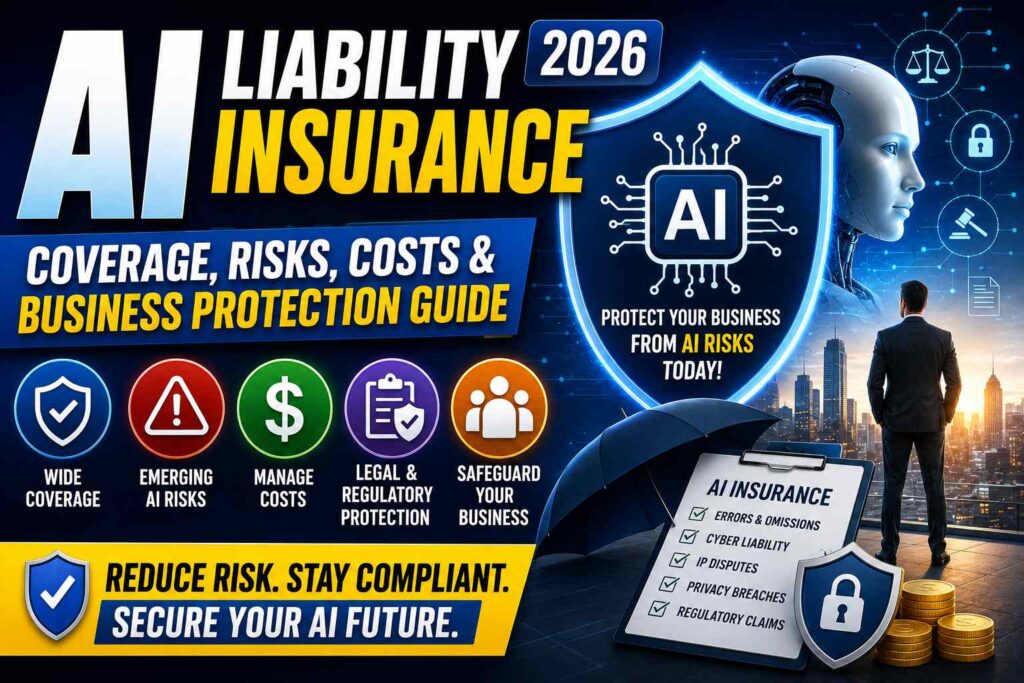
In 2026, AI liability insurance is becoming one of the fastest-growing insurance sectors because companies now face risks related to:
- AI-generated errors
- Algorithmic bias
- Data breaches
- Copyright disputes
- Cyberattacks
- Regulatory violations
- Autonomous system failures
This guide explains everything businesses need to know about AI liability insurance in 2026, including coverage types, costs, benefits, legal concerns, and future industry trends.
What Is AI Liability Insurance?
AI liability insurance is a specialized insurance policy designed to protect businesses that develop, deploy, or use artificial intelligence technologies.
It helps cover financial losses arising from:
- AI-related lawsuits
- Compliance violations
- Data privacy issues
- Intellectual property claims
- Cybersecurity incidents
- Faulty AI decisions
As AI adoption accelerates globally, insurers are creating tailored policies specifically for AI-driven risks.
Why AI Liability Insurance Is Important in 2026
AI systems are becoming more autonomous and deeply integrated into critical business operations.
This creates new exposure to:
- Legal liability
- Regulatory penalties
- Reputation damage
- Operational disruption
Even a small AI error can lead to:
- Massive financial losses
- Customer lawsuits
- Data breaches
- Regulatory investigations
For businesses using AI extensively, traditional insurance policies may not fully cover AI-specific risks.
Also Read: Term Life Insurance vs Whole Life Insurance: Which One Is Better in 2026?
Industries That Need AI Liability Insurance
Many sectors now rely heavily on AI technologies.
Healthcare
AI-powered diagnosis systems, medical imaging tools, and robotic surgery systems introduce serious liability risks.
Financial Services
Banks and fintech companies use AI for:
- Fraud detection
- Loan approvals
- Risk analysis
- Trading algorithms
Incorrect AI decisions may lead to lawsuits or compliance penalties.
E-Commerce & Retail
AI recommendation engines, automated pricing systems, and customer service chatbots can create:
- Consumer protection issues
- Discrimination claims
- Data privacy violations
Autonomous Vehicles
Tesla Model S and other AI-driven vehicles increase concerns about:
- Accident liability
- Software failures
- Autonomous driving errors
SaaS & Tech Companies
AI-powered software platforms face risks involving:
- Copyright infringement
- Data misuse
- AI hallucinations
- Service interruptions
What Does AI Liability Insurance Cover?
Coverage varies by insurer, but most policies may include:
1. Errors & Omissions (E&O)
Protects businesses if AI systems:
- Provide incorrect recommendations
- Cause financial harm
- Generate inaccurate outputs
Example:
An AI financial advisor gives incorrect investment guidance leading to client losses.
2. Cyber Liability Coverage
AI systems often process massive amounts of sensitive data.
Coverage may include:
- Data breaches
- Ransomware attacks
- Hacking incidents
- Customer notification costs
3. Regulatory & Compliance Protection
Governments worldwide are introducing stricter AI regulations.
Insurance may help cover:
- Legal defense costs
- Regulatory fines
- Compliance investigations
4. Intellectual Property Claims
AI-generated content creates growing copyright concerns.
Coverage may include disputes involving:
- AI-generated text
- Images
- Code
- Training data usage
5. Bias & Discrimination Claims
AI algorithms may unintentionally discriminate based on:
- Gender
- Race
- Age
- Financial background
Businesses may face lawsuits if AI decisions are considered unfair.
6. Product Liability
If an AI-powered product malfunctions and causes harm, insurers may cover:
- Injury claims
- Property damage
- Product recalls
Common AI Risks Businesses Face
AI Hallucinations
Generative AI tools sometimes produce false or misleading information.
Algorithmic Bias
Biased training data can lead to unfair outcomes.
Deepfake & Fraud Risks
AI-generated fake media is creating new cybersecurity and reputational threats.
Privacy Violations
AI systems handling customer data may violate privacy regulations.
Autonomous Decision Failures
AI systems making unsupervised decisions may create operational or financial damage.
Also Read: Telematics Car Insurance 2026: Everything You Need to Know
AI Regulations Driving Insurance Demand
Governments are rapidly introducing AI-related laws in 2026.
Examples include:
- AI transparency rules
- Consumer protection laws
- Data governance standards
- AI accountability frameworks
Companies failing to comply could face:
- Heavy fines
- Legal actions
- Operational restrictions
As regulation grows, demand for AI liability insurance is expected to increase significantly.
How Much Does AI Liability Insurance Cost?
Premiums depend on:
- Industry type
- AI usage level
- Revenue size
- Cybersecurity strength
- Claims history
- Data sensitivity
Estimated Annual Costs in 2026
| Business Type | Estimated Annual Premium |
|---|---|
| Small AI startup | $2,000–$10,000 |
| Mid-size SaaS company | $10,000–$50,000 |
| Enterprise AI platform | $50,000–$500,000+ |
High-risk industries may pay substantially more.
Factors That Affect AI Insurance Premiums
Data Security Practices
Strong cybersecurity reduces risk.
AI Transparency
Explainable AI systems may lower liability exposure.
Human Oversight
Businesses with manual review processes may receive better rates.
Industry Regulations
Highly regulated industries often face higher premiums.
AI Decision Autonomy
Fully autonomous systems typically increase insurance costs.
AI Liability Insurance vs Cyber Insurance
| Feature | AI Liability Insurance | Cyber Insurance |
|---|---|---|
| AI Errors Coverage | Yes | Limited |
| Algorithm Bias Claims | Yes | No |
| Data Breaches | Often Included | Yes |
| Regulatory AI Claims | Yes | Limited |
| Ransomware Protection | Sometimes | Yes |
Many businesses now combine both policies for broader protection.
Benefits of AI Liability Insurance
Financial Protection
Helps cover expensive lawsuits and claims.
Business Credibility
Clients increasingly expect AI risk management.
Regulatory Support
Assists with compliance-related costs.
Investor Confidence
Demonstrates responsible AI governance practices.
Challenges in AI Insurance
Rapidly Changing Technology
AI evolves faster than traditional insurance models.
Lack of Historical Data
Insurers still lack long-term AI risk statistics.
Unclear Legal Standards
AI liability laws remain uncertain in many countries.
The Future of AI Liability Insurance
Experts predict AI insurance will become a major global insurance category by the end of the decade.
Future trends may include:
- Real-time AI risk monitoring
- Dynamic insurance pricing
- AI-driven underwriting
- Autonomous system insurance
- Industry-specific AI coverage
Tips for Businesses Using AI
Conduct AI Risk Assessments
Identify operational and legal vulnerabilities.
Maintain Human Oversight
Avoid fully autonomous decision-making without review.
Strengthen Cybersecurity
Protect AI systems from hacking and data theft.
Document AI Processes
Maintain records for compliance and legal defense.
Review Vendor Contracts
Third-party AI providers may create additional liability exposure.
Frequently Asked Questions (FAQs)
What is AI liability insurance?
AI liability insurance protects businesses from risks and lawsuits related to artificial intelligence systems.
Who needs AI liability insurance?
Businesses developing or using AI technologies should consider coverage.
Does cyber insurance cover AI risks?
Partially, but many AI-specific risks require specialized coverage.
Is AI liability insurance expensive?
Costs vary depending on industry risk, AI usage, and company size.
Why is AI insurance important in 2026?
AI regulations, lawsuits, and cybersecurity risks are increasing rapidly worldwide.
Final Verdict
AI liability insurance is becoming essential for businesses operating in the AI-driven economy of 2026. As artificial intelligence becomes more powerful and widespread, companies face growing legal, financial, and reputational risks.
Businesses using AI should proactively:
- Assess risks
- Understand regulations
- Improve governance
- Consider specialized insurance protection
The companies that manage AI risks responsibly will be better positioned for long-term success in the rapidly evolving digital landscape.
Conclusion
Artificial intelligence is revolutionizing business operations, but it also introduces complex risks that traditional insurance policies may not fully address.
AI liability insurance offers protection against:
- AI-related lawsuits
- Data breaches
- Regulatory penalties
- Algorithmic failures
- Intellectual property disputes
As AI adoption continues to expand in 2026 and beyond, having the right insurance coverage may become a critical part of responsible business strategy.
1 thought on “AI Liability Insurance 2026: Coverage, Risks, Costs & Business Protection Guide”