
Choosing between Whole Life Insurance and Term Life Insurance is one of the biggest financial decisions many people make.
Both types of life insurance provide financial protection for your loved ones, but they work very differently.
Some people want:
- Affordable coverage
- Simple protection
- Temporary financial security
Others prefer:
- Lifetime coverage
- Cash value growth
- Long-term financial planning
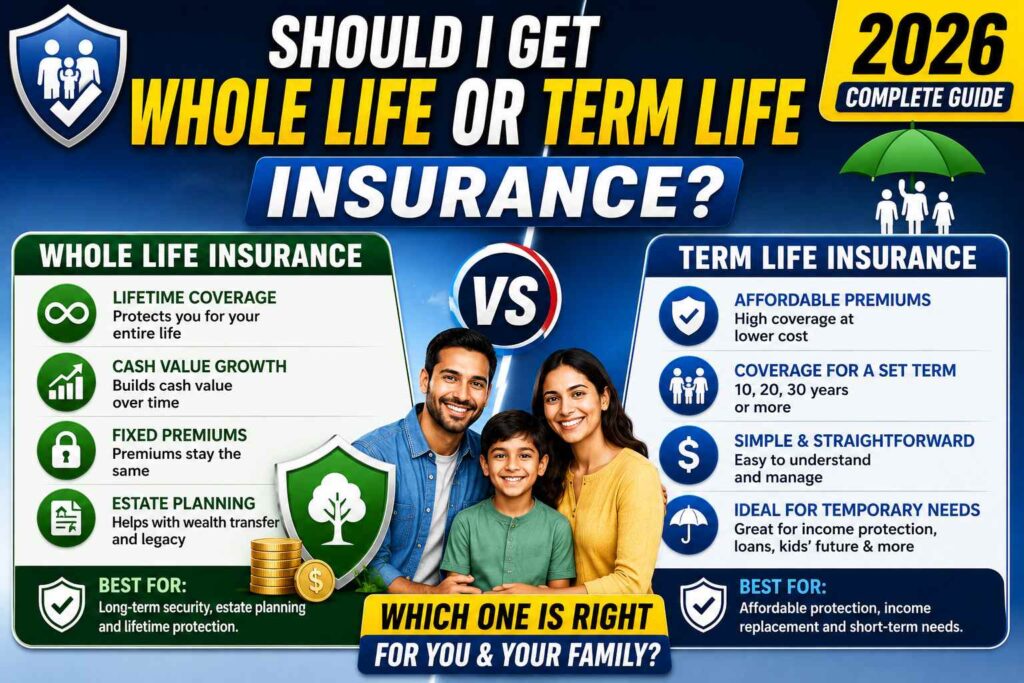
In this complete 2026 guide, you’ll learn:
- The difference between whole life and term life insurance
- Pros and cons of each
- Costs and benefits
- Which option may be better for your situation
What Is Term Life Insurance?
Term life insurance provides coverage for a specific period of time, such as:
- 10 years
- 20 years
- 30 years
If you die during the policy term:
- Your beneficiaries receive the death benefit
If the term expires while you are still alive:
- Coverage usually ends
Term insurance is mainly designed for affordable temporary protection.
What Is Whole Life Insurance?
Whole life insurance is a type of permanent life insurance that lasts your entire lifetime as long as premiums are paid.
It includes:
- Lifetime coverage
- Guaranteed death benefit
- Cash value component
Part of your premium builds cash value over time, which can grow tax-deferred.
Also Read: Term Life Insurance vs Whole Life Insurance: Which One Is Better in 2026?
Main Difference Between Whole Life and Term Life Insurance
The biggest difference is:
Term Life Insurance
Provides temporary coverage only.
Whole Life Insurance
Provides lifelong coverage and builds cash value.
Simple Insurance Comparison Formula
\text{Whole Life Insurance} = \text{Lifetime Coverage} + \text{Cash Value Growth}
Term Life vs Whole Life Comparison Table
| Feature | Term Life Insurance | Whole Life Insurance |
|---|---|---|
| Coverage Duration | Fixed term | Lifetime |
| Monthly Cost | Lower | Higher |
| Cash Value | No | Yes |
| Complexity | Simple | More complex |
| Investment Component | No | Yes |
| Best For | Affordable protection | Long-term financial planning |
Why Many People Choose Term Life Insurance
Lower Premiums
Term life insurance is usually much cheaper.
Example:
A healthy 30-year-old may get:
- $500,000 term coverage for $25–$40/month
The same whole life policy may cost several hundred dollars monthly.
Simple & Easy to Understand
No investment components or complicated structures.
Ideal for Temporary Needs
Useful during:
- Child-raising years
- Mortgage repayment years
- Income replacement periods
Advantages of Whole Life Insurance
Lifetime Coverage
Protection never expires if premiums are paid.
Builds Cash Value
Cash value grows over time and may be borrowed against.
Fixed Premiums
Premiums usually remain stable.
Estate Planning Benefits
Can help with:
- Wealth transfer
- Estate planning
- Long-term financial strategies
Drawbacks of Term Life Insurance
Coverage Eventually Ends
If you outlive the term:
- No payout occurs
Premiums Increase on Renewal
Renewing later may become expensive due to age or health changes.
No Savings Component
It only provides insurance protection.
Drawbacks of Whole Life Insurance
Much More Expensive
Premiums can be significantly higher than term life insurance.
Slower Investment Growth
Returns are often lower than some alternative investments.
More Complex
Policies include:
- Fees
- Cash value structures
- Loan options
Who Should Choose Term Life Insurance?
Term life insurance is often best for:
Young Families
Affordable protection during important financial years.
Parents With Dependents
Income replacement for children and spouses.
Homeowners
Helps cover mortgage obligations.
People on Tight Budgets
High coverage at lower monthly cost.
Temporary Financial Responsibilities
Useful for:
- Loans
- Tuition expenses
- Debt protection
Who Should Choose Whole Life Insurance?
Whole life insurance may be better for:
High-Income Individuals
People seeking long-term wealth planning.
Estate Planning Needs
Useful for transferring wealth to heirs.
Lifelong Dependents
Families supporting disabled dependents long-term.
People Wanting Permanent Coverage
Those who never want coverage to expire.
Cost Difference Between Whole Life and Term Life Insurance
Example Comparison
| Policy Type | Coverage | Estimated Monthly Cost |
|---|---|---|
| 20-Year Term | $500,000 | $30–$50 |
| Whole Life | $500,000 | $300–$700+ |
Costs depend on:
- Age
- Health
- Smoking status
- Coverage amount
Can You Convert Term Life to Whole Life?
Some policies allow conversion.
This means:
- You can later switch from term to permanent insurance
- Often without another medical exam
This feature provides flexibility.
Is Whole Life Insurance an Investment?
Partially yes.
Whole life policies build cash value, but many financial experts argue:
- Separate investing may provide better returns
- Term insurance + investing the difference can sometimes be more efficient
However, whole life offers stability and guaranteed benefits.
“Buy Term and Invest the Difference” Strategy
This popular strategy means:
- Buy affordable term insurance
- Invest extra money elsewhere
Example:
- Lower insurance premiums
- More money available for:
- Stocks
- Mutual funds
- Retirement accounts
When Whole Life Insurance May Make Sense
Whole life insurance may work well if you:
- Already maximize retirement savings
- Need estate planning tools
- Want guaranteed lifelong coverage
- Prefer stable financial products
Common Mistakes People Make
Buying Too Much Whole Life Insurance
High premiums can strain budgets.
Waiting Too Long to Buy Insurance
Premiums increase with age.
Choosing Based Only on Price
Coverage needs matter more than just monthly cost.
Not Understanding Policy Terms
Always review:
- Fees
- Riders
- Cash value rules
- Surrender charges
How Much Life Insurance Do You Need?
A common guideline is:
10–15× Annual Income
Example:
- Income = $60,000
- Suggested coverage = $600,000–$900,000
Simple Coverage Formula
\text{Recommended Coverage} \approx 10 \times \text{Annual Income}
Why Life Insurance Is Important in 2026
Life insurance remains essential because:
- Living costs are rising
- Families rely on dual incomes
- Debt levels remain high
- Financial uncertainty continues
Having proper coverage helps protect loved ones financially.
Which Is Better: Whole Life or Term Life?
There is no single answer for everyone.
Term Life Is Often Better If You Want:
- Affordable coverage
- Simplicity
- Temporary protection
- Maximum coverage for lower cost
Whole Life Is Often Better If You Want:
- Permanent protection
- Cash value growth
- Estate planning benefits
- Long-term financial strategies
Frequently Asked Questions (FAQs)
Is term life insurance better than whole life?
It depends on your goals, budget, and financial needs.
Why is whole life insurance more expensive?
Because it provides lifelong coverage and builds cash value.
Can I have both term and whole life insurance?
Yes. Many people combine both for balanced protection.
Does whole life insurance expire?
No, as long as premiums are paid.
What happens when term life insurance ends?
Coverage usually expires unless renewed or converted.
Final Verdict
For most people, term life insurance offers the best balance of affordability and financial protection, especially for young families and income earners.
Whole life insurance may make sense for:
- Wealthier individuals
- Estate planning
- Lifelong coverage needs
The right choice depends on:
- Your financial goals
- Budget
- Family responsibilities
- Long-term plans
Conclusion
Deciding whether to get whole life or term life insurance is an important financial decision that should match your personal goals and financial situation.
Before choosing:
- Compare policy costs
- Understand long-term commitments
- Review coverage needs
- Consider your future financial plans
The best life insurance policy is the one that provides the right protection while fitting comfortably within your overall financial strategy in 2026 and beyond.