
The gig economy is growing faster than ever in 2026. Millions of people now work as:
- Freelancers
- Delivery drivers
- Rideshare drivers
- Online sellers
- Consultants
- Remote contractors
While gig work offers flexibility and independence, it also comes with financial risks. Unlike traditional employees, most gig workers do not receive employer-sponsored benefits like health insurance, disability coverage, or retirement plans.
That’s why Gig Worker Insurance is becoming essential for independent workers worldwide.
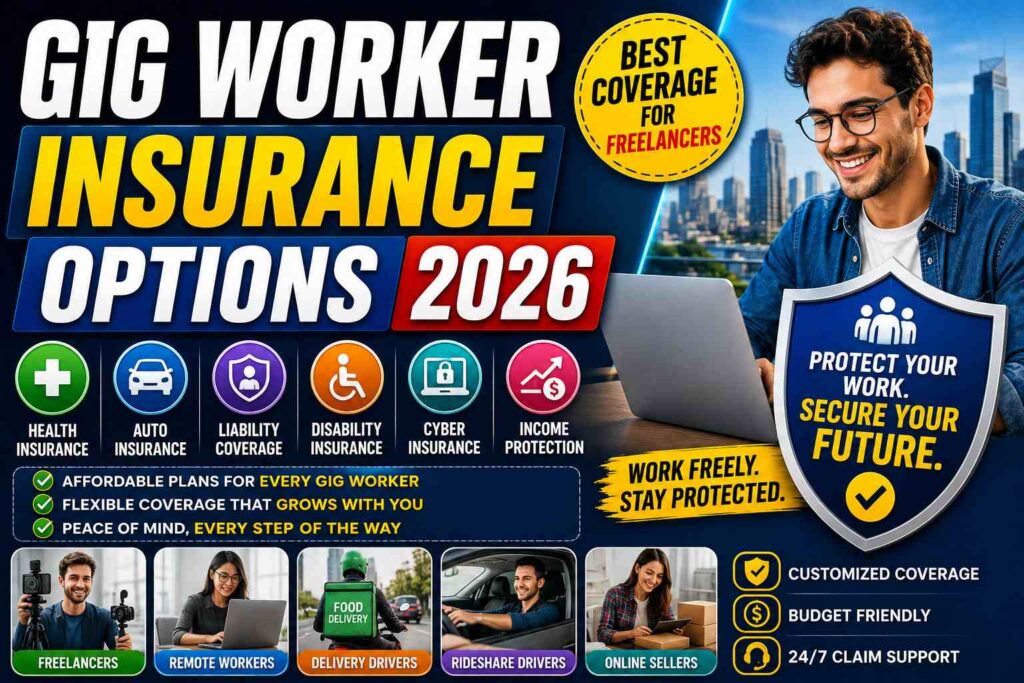
This guide explains the best insurance options available for gig workers, freelancers, and independent contractors in 2026.
Why Gig Workers Need Insurance
Gig workers often face risks that can directly affect their income and financial stability.
Common risks include:
- Medical emergencies
- Car accidents
- Client lawsuits
- Income loss
- Equipment theft
- Disability
- Cyber threats
Without proper coverage, a single unexpected event can create major financial problems.
Types of Gig Workers Who Need Insurance
Insurance can benefit almost every type of independent worker.
Freelancers
Including:
- Designers
- Writers
- Developers
- Marketers
- Consultants
Delivery Drivers
Food and parcel delivery workers using:
- Cars
- Bikes
- Scooters
Rideshare Drivers
Drivers working with rideshare platforms.
Online Business Owners
Including:
- E-commerce sellers
- Content creators
- Digital product sellers
Remote Professionals
Independent contractors working online with global clients.
Also Read: Cyber Insurance for Small Business 2026: Coverage, Costs & Protection Guide
Best Insurance Options for Gig Workers
Health Insurance
Health Insurance is one of the most important protections for gig workers.
Since freelancers usually don’t receive employer-sponsored healthcare, they must purchase their own plans.
What Health Insurance Covers
- Doctor visits
- Hospitalization
- Emergency treatment
- Prescriptions
- Preventive care
Why It Matters
Medical emergencies can create massive financial burdens without coverage.
Auto Insurance for Gig Workers
Gig drivers face higher driving risks because they spend more time on the road.
Standard personal auto insurance may not fully cover commercial gig work.
Gig Auto Insurance May Cover
- Delivery driving
- Rideshare usage
- Accident damage
- Liability claims
- Passenger injuries
Rideshare Insurance
Rideshare Insurance is specifically designed for app-based drivers.
It helps fill coverage gaps between:
- Personal insurance
- Platform-provided insurance
Liability Insurance
Liability coverage protects gig workers from lawsuits and legal claims.
Professional Liability Insurance
Also called Errors & Omissions (E&O) insurance.
Useful for:
- Freelancers
- Consultants
- Developers
- Agencies
Covers
- Client disputes
- Negligence claims
- Work-related mistakes
- Financial damages
General Liability Insurance
Protects against:
- Property damage
- Bodily injury claims
- Legal expenses
This is especially useful for workers meeting clients physically.
Disability Insurance
Gig workers depend entirely on their ability to work.
Disability Insurance helps replace income if you become unable to work due to illness or injury.
Benefits
- Monthly income support
- Financial stability during recovery
- Long-term protection
Income Protection Insurance
Some policies specifically help replace lost freelance income during:
- Illness
- Injury
- Unexpected downtime
This can be critical for workers without emergency savings.
Business Insurance for Freelancers
Many freelancers operate as small businesses.
Business insurance may cover:
- Office equipment
- Client contracts
- Business interruption
- Property damage
Cyber Insurance for Online Gig Workers
Online freelancers face increasing cyber threats in 2026.
Cyber Insurance may help protect against:
- Data breaches
- Hacking
- Ransomware
- Client data loss
This is especially important for:
- Developers
- Designers
- Digital marketers
- SaaS freelancers
Equipment Insurance
Many gig workers rely on expensive equipment such as:
- Laptops
- Cameras
- Smartphones
- Audio gear
Equipment insurance can help replace damaged or stolen devices.
Life Insurance for Gig Workers
Life Insurance can protect family members financially if something unexpected happens.
It may help cover:
- Debts
- Living expenses
- Education costs
- Funeral expenses
Also Read: AI Liability Insurance 2026: Coverage, Risks, Costs & Business Protection Guide
Insurance Challenges Gig Workers Face
Irregular Income
Variable income makes budgeting for premiums difficult.
Lack of Employer Benefits
Gig workers must handle all insurance independently.
Coverage Gaps
Some standard insurance policies exclude gig-related activities.
Higher Risk Exposure
Delivery and rideshare workers face greater accident risks.
How Much Does Gig Worker Insurance Cost?
Costs vary depending on:
- Industry
- Location
- Coverage type
- Risk level
- Income
Estimated Monthly Costs
| Insurance Type | Average Monthly Cost |
|---|---|
| Health Insurance | $200–$700 |
| Rideshare Insurance | $20–$100 |
| Liability Insurance | $30–$150 |
| Disability Insurance | $50–$250 |
| Cyber Insurance | $25–$200 |
Best Insurance Options by Gig Profession
Freelancers & Consultants
Recommended:
- Professional liability insurance
- Health insurance
- Cyber insurance
Delivery Drivers
Recommended:
- Commercial auto insurance
- Accident coverage
- Disability insurance
Content Creators
Recommended:
- Equipment insurance
- Cyber insurance
- Liability coverage
Rideshare Drivers
Recommended:
- Rideshare insurance
- Health insurance
- Income protection
Tips for Choosing Gig Worker Insurance
Compare Multiple Policies
Prices and coverage vary significantly.
Understand Exclusions
Always check what is not covered.
Choose Flexible Plans
Gig income can fluctuate monthly.
Bundle Policies
Bundling insurance can reduce costs.
Prioritize Essential Coverage
Start with:
- Health insurance
- Auto insurance
- Liability protection
Then expand coverage later.
Future of Gig Worker Insurance in 2026
The insurance industry is adapting rapidly to the growing gig economy.
Emerging trends include:
- On-demand insurance
- App-based coverage
- AI-driven pricing
- Flexible daily insurance plans
- Usage-based policies
More insurers are now creating products specifically designed for freelancers and independent contractors.
Is Gig Worker Insurance Worth It?
For most independent workers, yes.
Insurance helps provide:
- Financial protection
- Income stability
- Legal protection
- Peace of mind
Without coverage, even small incidents can create major financial stress.
Common Mistakes Gig Workers Make
Assuming Personal Insurance Is Enough
Many personal policies exclude commercial gig activities.
Ignoring Disability Coverage
An injury can completely stop freelance income.
Choosing the Cheapest Policy
Low-cost policies may provide weak protection.
Delaying Coverage
Waiting until after an incident occurs can be costly.
Frequently Asked Questions (FAQs)
What insurance do gig workers need?
Most gig workers should consider health, auto, liability, and disability insurance.
Do rideshare drivers need special insurance?
Yes. Standard auto insurance often does not fully cover rideshare activities.
Is gig worker insurance expensive?
Costs vary based on coverage type and risk level, but many affordable options exist.
Can freelancers get business insurance?
Yes. Freelancers can purchase liability, cyber, and business property coverage.
Why is disability insurance important for freelancers?
Freelancers depend entirely on active income, making disability coverage extremely valuable.
Final Verdict
Gig work offers flexibility and independence, but it also creates unique financial risks. Having the right insurance coverage can protect freelancers and independent workers from unexpected losses and income disruptions.
For most gig workers, the most important insurance types include:
- Health insurance
- Auto or rideshare insurance
- Liability coverage
- Disability protection
As the gig economy continues expanding in 2026, specialized insurance products are becoming more accessible, flexible, and affordable.
Conclusion
Gig worker insurance is becoming an essential part of financial planning for freelancers, delivery drivers, rideshare workers, and online entrepreneurs.
The right insurance policy can help protect:
- Your income
- Your business
- Your equipment
- Your future
Before choosing coverage:
- Compare insurers
- Understand exclusions
- Assess your risks
- Select policies that match your type of gig work
Protecting yourself today can help create long-term financial stability in the fast-growing gig economy.
1 thought on “Gig Worker Insurance Options 2026: Best Coverage for Freelancers”