
Choosing the right life insurance policy can be confusing, especially when comparing term life insurance and whole life insurance. Both provide financial protection for your loved ones, but they work very differently in terms of coverage duration, cost, investment features, and long-term benefits.
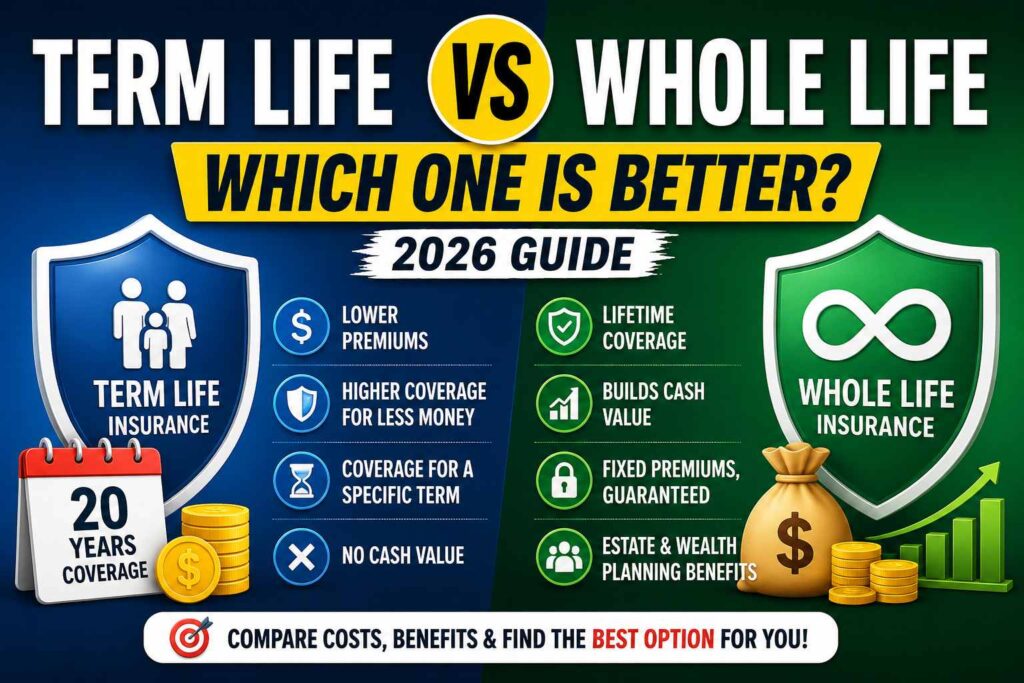
In this detailed guide, we’ll explain the major differences between term life and whole life insurance, their advantages and disadvantages, and which option may be best for your financial goals.
What Is Term Life Insurance?
Term Life Insurance is a type of life insurance that provides coverage for a specific period, such as 10, 20, or 30 years. If the insured person dies during the policy term, the beneficiaries receive a death benefit.
Once the term expires, coverage ends unless the policy is renewed or converted into permanent insurance.
Key Features of Term Life Insurance
- Fixed coverage period
- Lower monthly premiums
- No cash value component
- Simple and easy to understand
- Ideal for temporary financial needs
What Is Whole Life Insurance?
Whole Life Insurance is a permanent life insurance policy that provides lifelong coverage as long as premiums are paid. It also includes a cash value component that grows over time.
Part of your premium goes toward insurance coverage, while another portion builds cash value that can be borrowed against or withdrawn.
Key Features of Whole Life Insurance
- Lifetime coverage
- Builds cash value
- Higher premiums
- Guaranteed death benefit
- Potential dividends from some insurers
Term Life Insurance vs Whole Life Insurance: Quick Comparison
| Feature | Term Life Insurance | Whole Life Insurance |
|---|---|---|
| Coverage Duration | Fixed term (10–30 years) | Lifetime |
| Premium Cost | Lower | Higher |
| Cash Value | No | Yes |
| Investment Component | None | Included |
| Death Benefit | Guaranteed during term | Guaranteed for life |
| Complexity | Simple | More complex |
| Best For | Budget-friendly protection | Long-term wealth planning |
How Does Term Life Insurance Work?
When you purchase a term policy, you choose:
- Coverage amount
- Policy duration
- Beneficiaries
If you pass away during the policy period, your family receives the payout tax-free in most cases. If the term ends and you’re still alive, no payout is provided.
Example:
- A 30-year-old buys a 20-year term policy worth $500,000.
- If they die within 20 years, beneficiaries receive the death benefit.
- If they outlive the term, the policy expires.
How Does Whole Life Insurance Work?
Whole life insurance remains active throughout your lifetime. Along with the death benefit, the policy accumulates cash value at a guaranteed rate.
You may:
- Borrow against the cash value
- Withdraw funds
- Use it for retirement planning
- Leave a guaranteed inheritance
Because of these additional features, premiums are significantly higher than term policies.
Advantages of Term Life Insurance
1. Affordable Premiums
Term life insurance is usually much cheaper than whole life insurance, especially for younger and healthier individuals.
2. Higher Coverage for Less Money
You can often get more extensive coverage amounts at affordable monthly rates.
3. Simplicity
There are no investment components or complicated cash value calculations.
4. Great for Temporary Needs
Ideal for:
- Mortgage protection
- Child education expenses
- Income replacement
- Debt coverage
Disadvantages of Term Life Insurance
1. No Cash Value
You don’t build savings or investment value.
2. Coverage Expires
Once the term ends, you may need a new policy at a much higher premium.
3. Limited Long-Term Benefits
If you outlive the policy, no money is returned unless you purchased a return-of-premium rider.
Advantages of Whole Life Insurance
1. Lifetime Protection
Coverage never expires as long as premiums are paid.
2. Cash Value Growth
The policy builds tax-deferred cash value over time.
3. Fixed Premiums
Premiums remain stable throughout the life of the policy.
4. Financial Planning Benefits
Useful for:
- Estate planning
- Wealth transfer
- Business succession
- Retirement supplementation
Disadvantages of Whole Life Insurance
1. Expensive Premiums
Whole life policies can cost 5–15 times more than term life insurance.
2. Lower Returns Compared to Investments
Cash value growth may be slower than traditional investments like stocks or mutual funds.
3. More Complex
Whole life insurance includes fees, cash value calculations, and policy structures that can confuse buyers.
Which Is Better: Term or Whole Life Insurance?
The best option depends on your financial situation and goals.
Choose Term Life Insurance If:
- You want affordable coverage
- You have a limited budget
- You need protection for a temporary period
- You want maximum coverage at lower cost
- You are focused on family income protection
Choose Whole Life Insurance If:
- You want lifelong coverage
- You need estate planning benefits
- You prefer guaranteed cash value growth
- You are building long-term wealth
- You can afford higher premiums
Cost Comparison: Term vs Whole Life
Here’s a general comparison for a healthy 30-year-old non-smoker:
| Policy Type | Coverage Amount | Estimated Monthly Premium |
|---|---|---|
| 20-Year Term | $500,000 | $20–$40 |
| Whole Life | $500,000 | $300–$700 |
Actual costs vary based on:
- Age
- Health
- Gender
- Lifestyle
- Coverage amount
- Insurance company
Can You Convert Term Life to Whole Life?
Many insurers offer a conversion option, allowing policyholders to convert a term policy into a whole life policy without a medical exam.
This can be useful if:
- Your health changes later
- You want permanent coverage in the future
- You initially needed cheaper insurance
Is Whole Life Insurance a Good Investment?
Whole life insurance should primarily be viewed as an insurance product rather than a high-return investment.
While it offers:
- Stability
- Guaranteed growth
- Tax advantages
It may not outperform:
- Stocks
- ETFs
- Mutual funds
- Retirement accounts
Many financial experts recommend:
- Buying term life insurance
- Investing the premium difference separately
This strategy is often called:
“Buy Term and Invest the Difference.”
Common Myths About Life Insurance
Myth 1: Whole Life Is Always Better
Not necessarily. It depends on your goals and financial situation.
Myth 2: Term Life Insurance Is a Waste
Term life provides valuable protection during your highest financial responsibility years.
Myth 3: Young People Don’t Need Life Insurance
Buying early often means:
- Lower premiums
- Better eligibility
- Long-term savings
Tips for Choosing the Right Life Insurance Policy
1. Evaluate Your Financial Goals
Determine whether you need temporary or lifelong protection.
2. Compare Multiple Quotes
Always compare policies from different insurers.
3. Understand Policy Riders
Useful riders may include:
- Critical illness rider
- Waiver of premium
- Accidental death benefit
4. Check Insurer Reputation
Look for:
- Claim settlement ratio
- Customer reviews
- Financial strength ratings
Final Verdict
Both term life insurance and whole life insurance serve important purposes.
- Term life insurance is affordable, straightforward, and ideal for most families seeking income protection.
- Whole life insurance offers permanent coverage and cash value benefits for long-term financial planning.
For many people, term life insurance provides the best balance between affordability and protection. However, individuals with estate planning or wealth transfer goals may benefit more from whole life insurance.
The right choice depends on your:
- Budget
- Financial responsibilities
- Long-term goals
- Investment strategy
Frequently Asked Questions (FAQs)
Is term life insurance better than whole life insurance?
Term life insurance is often better for affordability and temporary coverage needs, while whole life insurance is better for lifelong protection and cash value accumulation.
Can I cash out a term life insurance policy?
No, standard term life insurance policies do not accumulate cash value.
Why is whole life insurance so expensive?
Whole life insurance includes lifetime coverage and a cash value savings component, making premiums significantly higher.
What happens when term life insurance expires?
Coverage ends unless you renew the policy, convert it, or purchase a new one.
Which life insurance is best for families?
Many families prefer term life insurance because it provides high coverage at affordable rates.
Conclusion
Understanding the difference between term life insurance and whole life insurance is essential before purchasing coverage. Carefully compare costs, benefits, and long-term financial goals to choose the policy that best protects your future and your family.
7 thoughts on “Term Life Insurance vs Whole Life Insurance: Which One Is Better in 2026?”